The Taiwan MMD company, releasing Philips-branded monitors, is going to start delivering the Momentum 436M6VBPAB display, based on the 43-inch VA matrix with the 3840 x 2160 pixels resolution. The novelty is distinguished due to the Adaptive-Sync technology support and DisplayHDR 1000 certification.
- Hp Ethernet Controller Driver Download
- Ethernet Controller Driver Has Been Registered In Florida
- Network Controller Driver
- Ethernet Controller Driver Download
This program will scan your computer for all the missing and outdated drivers that it can find, and then will download the right driver for you. All you have to do is click a few buttons and confirm the installations.
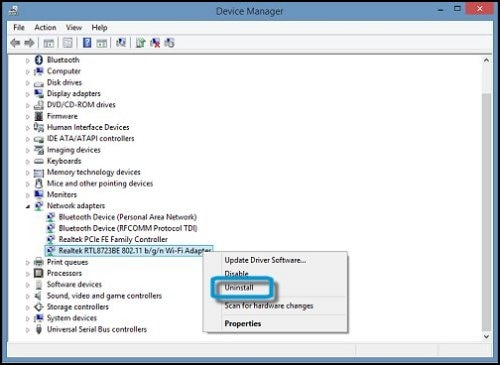
Method 2: Update the network card driver. The connection problem can be caused by faulty network drivers. To fix the problem, you can try to update the drivers. Next to the Ethernet card device name, if you see a computer icon with an arrow on it, the Ethernet has been disabled. Following screenshot is for your reference. 5) Then right. Download driver Generic Marvell Yukon 88E8053 based Ethernet Controller Download free driver for 3Com 3C940 Gigabit LOM Ethernet Adapter Vista W7 W8 W8.1 W10 If You cannot find the appropriate driver for your operating system you can ask your question to the users of the service in our section of questions and answers or contact our support.
- Make sure no other device has registered the interrupt that you set the ethercard for. In this case, the probe will happen, and the ether driver will complain loudly at boot about not being able to get the desired IRQ line. 5) If you are still stumped by the silent failure of the driver, then edit it and add some printk() to the probe.
- Download driver Qualcomm Atheros AR8162/8166/8168 PCI-E Fast Ethernet Controller Download free driver for Qualcomm Atheros AR8132 PCI-E Fast Ethernet Controller Vista64 W7x64 W8x64 W8.1x64 W10x64.
- How do i find my ethernet controller? An i have another internet source i just need to know where to find the correct drivers.
- Or do I need a wifi driver for the network controller because the network controller only handles wifi. Unless you have some unusual hardware the kernel should already have a driver for both the ethernet and wifi controllers loaded.
Hp Ethernet Controller Driver Download

The manufacturer designed Philips Momentum 436M6VBPAB to act as an analogue of UHD-TV-sets. The refreshment rate makes this device attractive for PC gamers and playstations owners.
Philips Momentum 436M6VBPAB ensures the 97.6 % covering of the DCI-P3 colour gamut, while featuring the 1000 cd/m² peak brightness, 50 000 000:1 dynamic contrast and 4 ms response time. In the meantime, the display update rate is limited to 60 Hz. Image output is conducted via HDMI 2.0, DisplayPort 1.2, Mini DisplayPort and USB Type-C ports. The specialty is also supplied with 7 W speakers and the USB 3.0 hub.
Philips Momentum …
In computing, a device driver is a computer program that operates or controls a particular type of device that is attached to a computer.[1] A driver provides a software interface to hardware devices, enabling operating systems and other computer programs to access hardware functions without needing to know precise details about the hardware being used.
A driver communicates with the device through the computer bus or communications subsystem to which the hardware connects. When a calling program invokes a routine in the driver, the driver issues commands to the device. Once the device sends data back to the driver, the driver may invoke routines in the original calling program. Drivers are hardware dependent and operating-system-specific. They usually provide the interrupt handling required for any necessary asynchronous time-dependent hardware interface.[2]
Purpose[edit]
The main purpose of device drivers is to provide abstraction by acting as a translator between a hardware device and the applications or operating systems that use it.[1] Programmers can write higher-level application code independently of whatever specific hardware the end-user is using.For example, a high-level application for interacting with a serial port may simply have two functions for 'send data' and 'receive data'. At a lower level, a device driver implementing these functions would communicate to the particular serial port controller installed on a user's computer. The commands needed to control a 16550 UART are much different from the commands needed to control an FTDI serial port converter, but each hardware-specific device driver abstracts these details into the same (or similar) software interface.
Development[edit]
Writing a device driver requires an in-depth understanding of how the hardware and the software works for a given platform function. Because drivers require low-level access to hardware functions in order to operate, drivers typically operate in a highly privileged environment and can cause system operational issues if something goes wrong. In contrast, most user-level software on modern operating systems can be stopped without greatly affecting the rest of the system. Even drivers executing in user mode can crash a system if the device is erroneously programmed. These factors make it more difficult and dangerous to diagnose problems.[3]
The task of writing drivers thus usually falls to software engineers or computer engineers who work for hardware-development companies. This is because they have better information than most outsiders about the design of their hardware. Moreover, it was traditionally considered in the hardware manufacturer's interest to guarantee that their clients can use their hardware in an optimum way. Typically, the Logical Device Driver (LDD) is written by the operating system vendor, while the Physical Device Driver (PDD) is implemented by the device vendor. But in recent years non-vendors have written numerous proprietary device drivers, mainly for use with free and open sourceoperating systems. In such cases, it is important that the hardware manufacturer provides information on how the device communicates. Although this information can instead be learned by reverse engineering, this is much more difficult with hardware than it is with software.
Microsoft has attempted to reduce system instability due to poorly written device drivers by creating a new framework for driver development, called Windows Driver Foundation (WDF). This includes User-Mode Driver Framework (UMDF) that encourages development of certain types of drivers—primarily those that implement a message-based protocol for communicating with their devices—as user-mode drivers. If such drivers malfunction, they do not cause system instability. The Kernel-Mode Driver Framework (KMDF) model continues to allow development of kernel-mode device drivers, but attempts to provide standard implementations of functions that are known to cause problems, including cancellation of I/O operations, power management, and plug and play device support.
Apple has an open-source framework for developing drivers on macOS called the I/O Kit.
In Linux environments, programmers can build device drivers as parts of the kernel, separately as loadable modules, or as user-mode drivers (for certain types of devices where kernel interfaces exist, such as for USB devices). Makedev includes a list of the devices in Linux: ttyS (terminal), lp (parallel port), hd (disk), loop, sound (these include mixer, sequencer, dsp, and audio)...[4]
The Microsoft Windows.sys files and Linux .ko modules contain loadable device drivers. The advantage of loadable device drivers is that they can be loaded only when necessary and then unloaded, thus saving kernel memory.
Ethernet Controller Driver Has Been Registered In Florida
Kernel mode vs. user mode[edit]
Device drivers, particularly on modernMicrosoft Windows platforms, can run in kernel-mode (Ring 0 on x86 CPUs) or in user-mode (Ring 3 on x86 CPUs).[5] The primary benefit of running a driver in user mode is improved stability, since a poorly written user mode device driver cannot crash the system by overwriting kernel memory.[6] On the other hand, user/kernel-mode transitions usually impose a considerable performance overhead, thereby prohibiting user-mode drivers for low latency and high throughput requirements.
Kernel space can be accessed by user module only through the use of system calls. End user programs like the UNIX shell or other GUI-based applications are part of the user space. These applications interact with hardware through kernel supported functions.
Applications[edit]
Because of the diversity of modern hardware and operating systems, drivers operate in many different environments.[7] Drivers may interface with:
- Local buses of various sorts—in particular, for bus mastering on modern systems
- Low-bandwidthI/O buses of various sorts (for pointing devices such as mice, keyboards, USB, etc.)
- Computer storage devices such as hard disk, CD-ROM, and floppy disk buses (ATA, SATA, SCSI)
- Implementing support for different file systems
Common levels of abstraction for device drivers include:
- For hardware:
- Interfacing directly
- Writing to or reading from a device control register
- Using some higher-level interface (e.g. Video BIOS)
- Using another lower-level device driver (e.g. file system drivers using disk drivers)
- Simulating work with hardware, while doing something entirely different[8]
- For software:
- Allowing the operating system direct access to hardware resources
- Implementing only primitives
- Implementing an interface for non-driver software (e.g. TWAIN)
- Implementing a language, sometimes quite high-level (e.g. PostScript)
So choosing and installing the correct device drivers for given hardware is often a key component of computer system configuration.[9]
Virtual device drivers[edit]
Virtual device drivers represent a particular variant of device drivers. They are used to emulate a hardware device, particularly in virtualization environments, for example when a DOS program is run on a Microsoft Windows computer or when a guest operating system is run on, for example, a Xen host. Instead of enabling the guest operating system to dialog with hardware, virtual device drivers take the opposite role and emulates a piece of hardware, so that the guest operating system and its drivers running inside a virtual machine can have the illusion of accessing real hardware. Attempts by the guest operating system to access the hardware are routed to the virtual device driver in the host operating system as e.g., function calls. The virtual device driver can also send simulated processor-level events like interrupts into the virtual machine.
Virtual devices may also operate in a non-virtualized environment. For example, a virtual network adapter is used with a virtual private network, while a virtual disk device is used with iSCSI. A good example for virtual device drivers can be Daemon Tools.
There are several variants of virtual device drivers, such as VxDs, VLMs, and VDDs.
Open source drivers[edit]
- Printers: CUPS
- RAIDs: CCISS[10] (Compaq Command Interface for SCSI-3 Support[11])
- Scanners: SANE
- Video: Vidix, Direct Rendering Infrastructure
Solaris descriptions of commonly used device drivers:
- fas: Fast/wide SCSI controller
- hme: Fast (10/100 Mbit/s) Ethernet
- isp: Differential SCSI controllers and the SunSwift card
- glm: (Gigabaud Link Module[12]) UltraSCSI controllers
- scsi: Small Computer Serial Interface (SCSI) devices
- sf: soc+ or social Fiber Channel Arbitrated Loop (FCAL)
- soc: SPARC Storage Array (SSA) controllers and the control device
- social: Serial optical controllers for FCAL (soc+)
APIs[edit]
Network Controller Driver
- Windows Display Driver Model (WDDM) – the graphic display driver architecture for Windows Vista, Windows 7, Windows 8, and Windows 10.
- Unified Audio Model (UAM)[13]
- Windows Driver Foundation (WDF)
- Windows Driver Model (WDM)
- Network Driver Interface Specification (NDIS) – a standard network card driver API
- Advanced Linux Sound Architecture (ALSA) – as of 2009 the standard Linux sound-driver interface
- Scanner Access Now Easy (SANE) – a public-domain interface to raster-image scanner-hardware
- I/O Kit – an open-source framework from Apple for developing macOS device drivers
- Installable File System (IFS) – a filesystem API for IBM OS/2 and Microsoft Windows NT
- Open. WhatIs.com. TechTarget. Retrieved 19 March 2018.
- ^EMC Education Services (2010). Information Storage and Management: Storing, Managing, and Protecting Digital Information. John Wiley & Sons.
- ^Burke, Timothy (1995). Writing device drivers: tutorial and reference. Digital Press.
- ^'MAKEDEV — Linux Command — Unix Command'. Linux.about.com. 2009-09-11. Retrieved 2009-09-17.
- ^'User-mode vs. Kernel-mode Drivers'. Microsoft. 2003-03-01. Retrieved 2008-03-04.
- ^'Introduction to the User-Mode Driver Framework (UMDF)'. Microsoft. 2006-10-10. Retrieved 2008-03-04.
- ^Deborah Morley (2009). Understanding Computers 2009: Today and Tomorrow. Cengage Learning.
- ^Computer Peripherals and Interfaces. Technical Publications Pune. January 2008. pp. 5–8. ISBN8184314744. Retrieved 2016-05-03.
- ^'What are Device Drivers and why do we need them?'. drivers.com. April 17, 2015. Retrieved March 19, 2018.
- ^'CCISS'. SourceForge. 2010. Retrieved 2010-08-11.
Drivers for the HP (previously Compaq) Smart Array controllers which provide hardware RAID capability.
- ^Russell, Steve; et al. (2003-10-21). 'Abbreviations and acronyms'. Server Consolidation with the IBM eserver xSeries 440 and VMware ESX Serve. IBM International Technical Support Organization. p. 207. ISBN0-7384-2684-9. Retrieved 2011-08-14.
- ^'US Patent 5969841 - Gigabaud link module with received power detect signal'. PatentStorm LLC. Retrieved 2009-09-08.
An improved Gigabaud Link Module (GLM) is provided for performing bi-directional data transfers between a host device and a serial transfer medium.
- ^'Unified Audio Model (Windows CE 5.0)'. msdn.microsoft.com. Retrieved 2016-09-19.
- ^'dxd - dynax driver framework: Main Page'. dxd.dynax.at. Retrieved 2016-09-19.